Lake Mead Falls to Record Low as Western Drought Persists
08/10/2026 / By Iva Greene
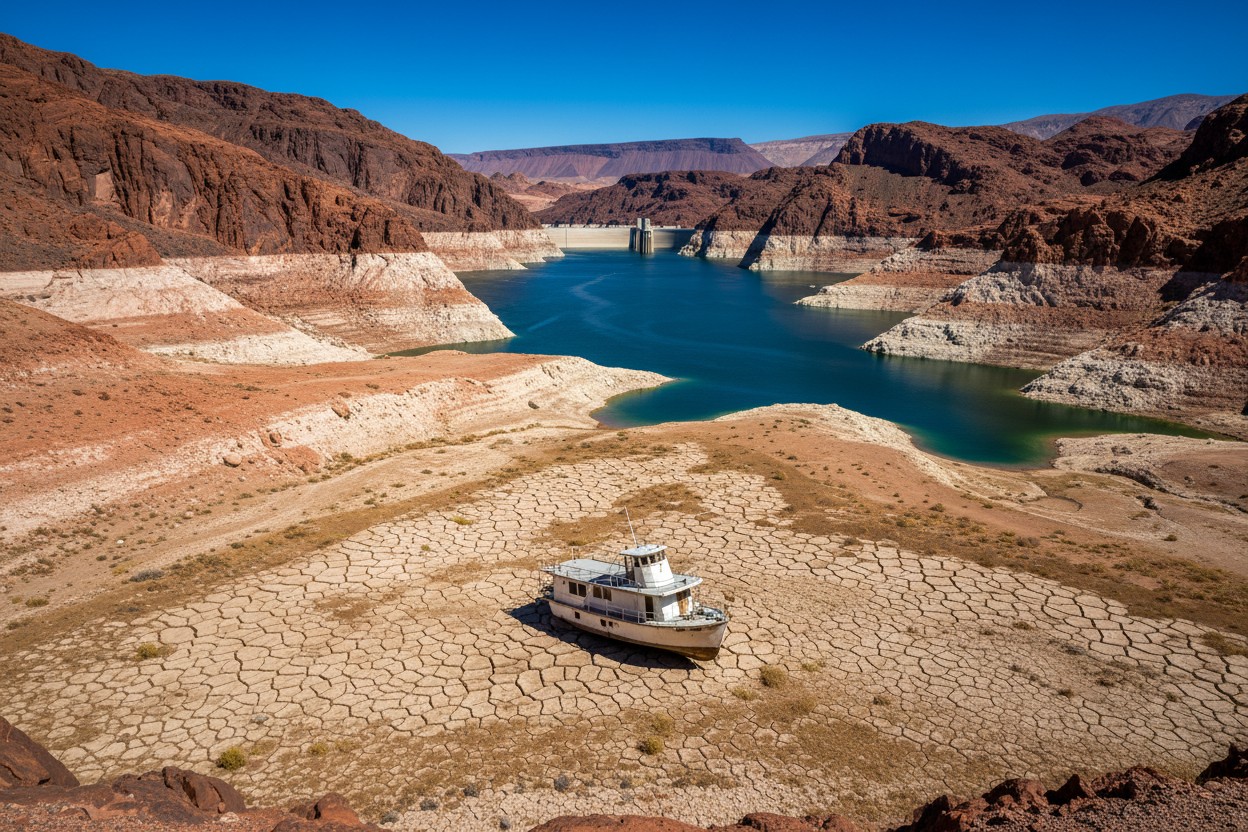
Lake Mead, the nation’s largest reservoir by storage capacity, has fallen to its lowest level on record as drought persists across the American West, according to U.S. Bureau of Reclamation (USBR) data.
The reservoir’s surface elevation measured 1,040.50 feet above sea level on Thursday, below the previous record low of 1,040.58 feet set in July 2022, the data show. Hoover Dam forms Lake Mead along the Colorado River at the Nevada-Arizona border, and the reservoir holds water for approximately 40 million people in seven Western states and parts of Mexico, according to officials [1].
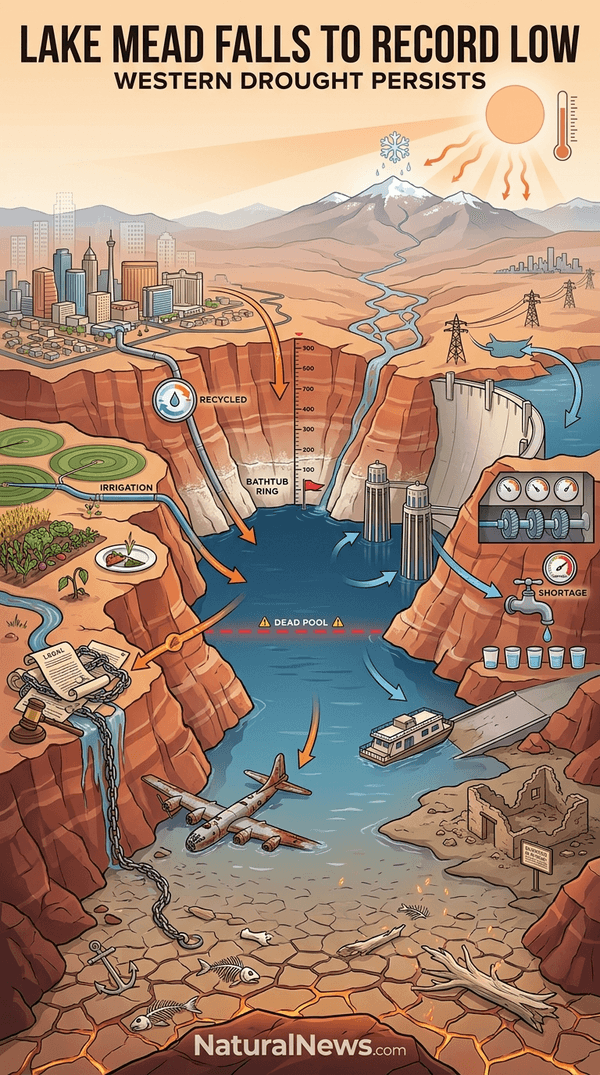
Hoover Dam was built at Boulder Canyon after the Glen Canyon site was judged too far from roads and potential water and electricity users, and the project became the largest public works project of the Depression era, according to historian Ward Chip [2]. Water managers describe dead pool as the point at which a reservoir drops so low it can no longer flow downstream from the dam, and scientists have expressed concern that the two largest U.S. reservoirs could reach that state, according to a report by Children’s Health Defense [3].
Drought Conditions Span Two Decades
The Colorado River Basin has been in a so-called megadrought for more than 20 years, according to the Epoch Times. Lake Mead was near capacity in 1999, but by 2022 its surface had fallen by nearly 176 feet, and the period is the driest on record throughout many parts of the West, the report stated [4].
Early warnings preceded the latest record. In 2020, the USBR conducted a simulation study calculating future water levels in Lake Powell and Lake Mead as water coming from the river was just 55% of the annual average, according to a report by NaturalNews.com [5]. The U.S. Drought Monitor had warned that multiple Western states were in a period of severe drought and that conditions for a multi-state ‘mega-drought’ were drawing near, according to the same outlet [6].
Water Shortage Triggers Federal Cuts
Southern Nevada receives nearly 90% of its water from Lake Mead, and Nevada’s share of the river has fallen by billions of gallons over the course of several years, according to the Epoch Times. The Southern Nevada Water Authority has described the Colorado River allotment as its largest and most critical resource, with conservation efforts since the early 2000s reducing per-person use and nearly all indoor water recycled, the agency said [4].
The federal government declared its first water shortage on the river in 2021, reducing water allotments for some states and Mexico, according to a report by NaturalNews.com [7]. USBR Commissioner Camille Calimlim Touton later told a Senate hearing that protecting “critical levels” at Lake Mead and Lake Powell would require major reductions in water deliveries, the report stated [8].
The Colorado River has become the most litigated river in the world as demand has increased, according to author Steven Solomon [9]. As much as 75% of the water from Lake Mead goes to agriculture, creating a potential food production problem, according to analyst Chris Martenson [10].
Hydropower and Demand Pressures
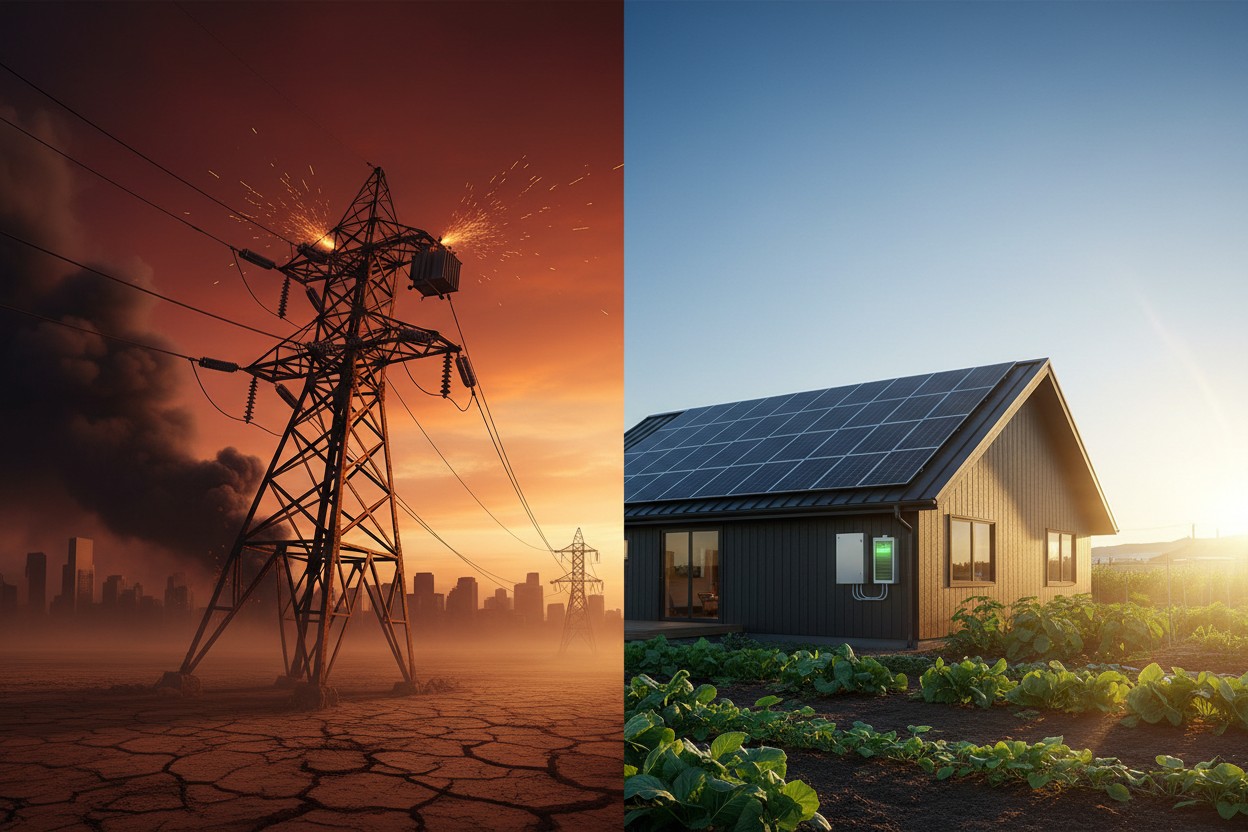
Hoover Dam produces thousands of gigawatt-hours of electricity annually for customers in California, Arizona, and Nevada, according to officials. At Lake Powell, the companion reservoir formed by Glen Canyon Dam, the surface measured 3,521 feet on Thursday, down nearly 33 feet from a year ago, according to data. Electricity production becomes infeasible once the surface falls to 3,490 feet and below, officials said [4].
Lower water levels at Lake Powell have threatened the Glen Canyon Dam’s electricity generation, which can power almost half a million American homes, according to a 2021 report by NaturalNews.com. The USBR warned that the dam would cease producing power once the lake’s level fell below the minimum power pool, the report stated [11]. Officials had earlier said that falling levels at Lake Mead were endangering the power grid in Western states [12].
Population growth has added to demand across the Southwest. Analysts have identified overpopulation and urban growth as factors in the region’s water crisis, according to a report by NaturalNews.com [13]. Researchers studying desert urbanization have examined how changing growth trajectories, demand management, and urban form affect future shortage conditions under a range of climates, according to a study by Patricia Gober [14].
Low Water Reveals Submerged Sites
Lake Mead National Recreation Area attracts millions of visitors each year for activities including boating, fishing, and hiking, according to officials. Receding water levels have exposed once-submerged features, including the ruins of the town of St. Thomas and a World War II-era B-29 bomber that crashed into the lake nearly 70 years ago, according to reports [1].
Both reservoirs continue to operate despite being below the elevation levels needed for reliable power and storage, officials said [1]. Recreation spending in the region has measurable employment effects; a study of the Glen Canyon Dam area estimated direct and total job impacts from visitor expenditures, according to researchers Douglas A. J. and D. A. Harpman [15].
Ongoing Pressures on the Colorado River
Experts have warned that the drought conditions that lowered Lake Mead and Lake Powell are unlikely to resolve soon. The two reservoirs may not refill ‘in our lifetimes,’ according to a 2023 report citing the Los Angeles Times [16].
Negotiations over water use cuts have stalled as well. Six of seven Colorado River basin states sketched out a joint proposal for meeting federal demands, but the states failed for a second time in six months to reach a consensus, according to a report by NaturalNews.com [17].
Federal officials have said that protecting critical levels at the country’s two largest reservoirs will require continued reductions in water deliveries as the region adjusts to a drier Colorado River.
References
- ZeroHedge. “Lake Mead Hits Lowest Level On Record Amid Decade-Long Western Drought”. ZeroHedge. August 9, 2026.
- Ward Chip. “Hopes Horizon”.
- Robert Glennon. “‘Dead Pool’ Sounds Ominous — Here’s Why It Is”. Children’s Health Defense.
- The Epoch Times. “Lake Mead Hits Lowest Level on Record Amid Decade-Long Western Drought”. The Epoch Times. August 8, 2026.
- NaturalNews.com. “Low runoff from the Colorado River threatens water shortage across 7 western states”. NaturalNews.com. September 20, 2020.
- NaturalNews.com. “Dust Bowl conditions are returning as climate scientists warn of multi-state mega-drought”. NaturalNews.com. March 15, 2021.
- NaturalNews.com. “Water shortage on Colorado River poses severe challenge for Arizona farmers”. NaturalNews.com. August 19, 2021.
- NaturalNews.com. “Federal government to make major cuts in water deliveries to Western states”. NaturalNews.com. June 17, 2022.
- Steven Solomon. “Water”.
- Chris Martenson. “The Real Deadpool: America’s Drought”. PeakProsperity.com. June 14, 2022.
- NaturalNews.com. “Water levels in Colorado River dams reach new lows electricity generation may be halted”. NaturalNews.com. September 29, 2021.
- NaturalNews.com. “Hoover Dam water levels at all-time low endangering the power grid in Western states”. NaturalNews.com. August 18, 2021.
- NaturalNews.com. “Ring the ALARM! Today’s water crisis isn’t a fire drill – it’s apocalyptic”. NaturalNews.com. July 6, 2022.
- Patricia Gober. “Desert urbanization and the challenges of water sustainability”. Current Opinion in Environmental Sustainability. 2010.
- Douglas A. J. and D. A. Harpman. “Estimating Recreation Employment Effects with IMPLAN for the Glen Canyon Dam Region”. Journal of Environmental Management. 1995.
- NaturalNews.com. “The dying of the West: Lake Mead and Lake Powell may not refill in our lifetimes warn experts”. NaturalNews.com. February 7, 2023.
- Belle Carter. “Water Wars: Colorado River basin states fail to reach consensus on water usage cuts”. NaturalNews.com. February 3, 2023.
Explainer Infographic
Submit a correction >>
Tagged Under:
American West, Collapse, Colorado River, conservation, Drought, ecology, electricity, energy, environ, Hoover Dam, hydropower, Lake Mead, Megadrought, Nevada-Arizona, power, record low, water shortage, water supply, Water Wars
This article may contain statements that reflect the opinion of the author
RECENT NEWS & ARTICLES