California Auditor: 57 Dams in Poor or Unsatisfactory Condition
10/18/2026 / By Iva Greene
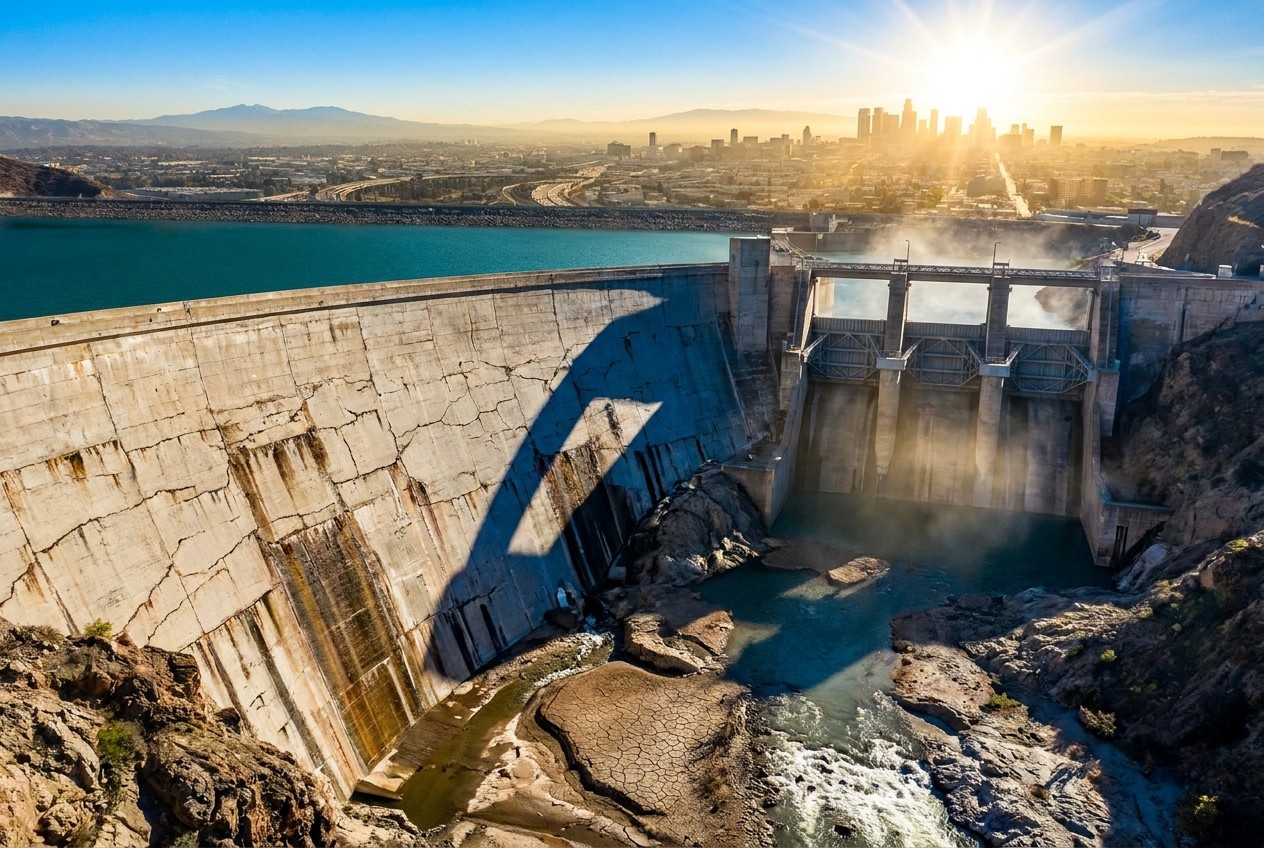
A report released Oct. 13 by the California State Auditor found that 57 dams across the state are in poor or unsatisfactory condition, including 40 structures with high or extremely high hazard classifications as of May, according to the audit [1]. The California Department of Water Resources (DWR) assessed 1,222 dams statewide, the auditor’s office reported [2].
The audit warns that the failure of a single high-hazard dam could endanger hundreds of thousands of residents and cause billions of dollars in property damage, citing DWR’s own hazard assessments [1]. For security reasons, the auditor’s office does not identify which dams are in disrepair, but notes that most sit near high-population centers such as Los Angeles, San Diego and the Bay Area, the office stated [3].
The report is the latest assessment of a dam network whose risks have drawn scrutiny since the 2017 Oroville Dam spillway crisis, when roughly 188,000 residents were ordered to evacuate amid fears the emergency spillway would collapse [4].
Auditor Cites Aging Dams, Funding Shortfalls, Enforcement Gaps
The most common factors behind the poor ratings are old age, owners’ inability to pay for repairs, and the absence of comprehensive safety standards at the time the dams were built, the auditor found [2]. While DWR holds enforcement authority over dams, the department “only sent notices of violations to dam owners but has not taken further actions, thereby allowing serious deficiencies to persist,” the auditor wrote [2].
Of the 1,222 dams reviewed, owners of 60 dams with higher hazard classifications failed to comply with state law requiring they submit emergency action plans designed to protect life and property in the event of a structural failure, according to the audit [5]. Local maintaining agencies charged with levee upkeep were found lacking in maintenance duties, while DWR was reluctant to intervene, the auditor stated, creating heightened risks for nearby communities [2]. News reports also noted that a total of 245 dams lack approved emergency plans [6].
Gov. Gavin Newsom (D) proclaimed a state of emergency last month to prepare California for El Niño conditions, which typically affect the U.S. from October through May and bring increased rainfall and flash flooding to southern areas of the state [2]. In the proclamation, Newsom highlighted the risks posed to dams and ordered DWR to contact dam owners and remind them of their responsibility to repair, maintain and safely manage dams and other structures, according to the report [2].
DWR Rejects Audit’s Characterization of Dam Safety Failures
In a response included in the audit report, DWR criticized the draft document for portraying a “fundamental lack of understanding” of the complexities involved in flood management and dam safety [2]. The department said the audit misrepresents poor maintenance and lack of action as the sole reasons dams are in unsatisfactory condition [2].
“This further demonstrates the lack of technical understanding that the most critical deficiencies are found through DWR’s reevaluation program; these are not visible in an inspection and most often occur because design loads (earthquakes and floods) are larger than originally expected,” the department stated [2].
DWR added that design standards, engineering methods and science have changed over time, and that the dams “were not necessarily built poorly” [2]. The department said its reevaluation program periodically reviews dams deemed to pose a threat to life against current safety standards and is responsible for detecting more than two-thirds of dam deficiencies [2].
In a Sept. 30 statement, DWR announced completion of a $235 million rehabilitation of the Oroville Dam, the tallest in the United States [2]. “This investment in Oroville Dam’s infrastructure ensures the reliable and safe operation of the State Water Project’s largest flood protection and water supply facility,” John Yarbrough, deputy director of the DWR’s State Water Project, said in the statement [2].
National Dam Safety Data Shows Broad Risks
Dam safety is a wider national issue. According to a report from the American Society of Civil Engineers, almost 17,000 dams in the United States are considered potentially high hazard [2]. The report highlighted that the average age of dams in the U.S. is more than 60 years, with seven out of 10 estimated to be at least 50 years old in 2025 [2].
“Without a more significant commitment to dam safety through increased annual investment in inspection, monitoring, planning, and necessary dam repairs, the cost to bring the nation’s dams into a state of good repair will continue to rise,” the association said. “And downstream communities will face a greater risk of danger from potential dam failure” [2]. Similar concerns have been raised in environmental literature, which notes that many dams are old and should be retired for safety reasons, with the average life expectancy of a dam at 50 years [7].
The historical record underscores the stakes. The worst American storage dam failure of the twentieth century occurred in Southern California when, a few minutes before midnight on March 12, 1928, the St. Francis Dam gave way and twelve billion gallons of water descended upon the Santa Clara River Valley, according to dam historian Donald C. Jackson [8].
The two-hundred-feet-high concrete curved gravity dam was built under the direction of William Mulholland, chief engineer for Los Angeles’ Bureau of Water Works and Supply [8]. More recently, New Mexico’s Doña Ana County issued evacuation orders on Sept. 29 for five areas — Placitas, Hatch, Rincon, Salem and Garfield — amid worsening flooding and warnings about a potential dam failure, according to the county’s alert [9].
References
- 57 California Dams in Poor or Unsatisfactory Condition, State Auditor Says. https://theepochtimes.com/us/57-california-dams-in-poor-or-unsatisfactory-condition-state-auditor-says-6103625
- 57 California Dams In Poor Or Unsatisfactory Condition, State Auditor Says. https://www.zerohedge.com/political/57-california-dams-poor-or-unsatisfactory-condition-state-auditor-says
- California auditor gives damning assessment of state’s dams. https://www.courthousenews.com/california-auditor-gives-damning-assessment-of-states-dams/
- Disturbing aerial photos reveal how bad the Oroville Dam really is – NaturalNews.com, March 03, 2017.
- 57 California Dams In Poor Or Unsatisfactory Condition …. https://www.zerohedge.com/political/57-california-dams-poor-or-unsatisfactory-condition-state-auditor-says
- California State Auditor Warns of Risks From 57 Dams in …. https://www.edhat.com/california/news/california-dam-safety-audit-poor-condition/
- Americas environmental report card are we making the grade by Blatt Harvey_1
- Pastoral and monumental dams postcards and the American landscape by Jackson Donald C Donald Conrad 1953
- Dona Ana County Urges Residents to Evacuate Amid Worsening Floods, Dam Failure. https://theepochtimes.com/us/dona-ana-county-urges-residents-to-evacuate-amid-worsening-floods-dam-failure-6096603
- CA officials have the power to fix the state’s riskiest dams. They’ve …. https://www.planetizen.com/news/2026/10/138658-ca-officials-have-power-fix-states-riskiest-dams-theyve-never-used-it
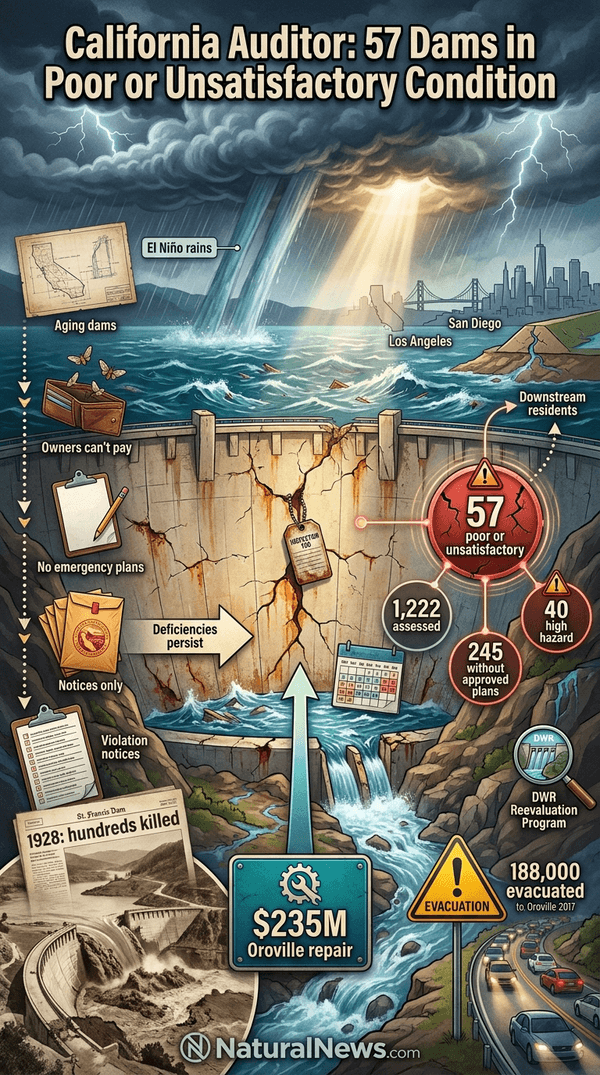
Explainer Infographic
Submit a correction >>
Tagged Under:
big government, California, california collapse, California Department of Water Resources, California State Auditor, Collapse, dam, dam failure, dam safety, dams, dangerous, disaster, Flooding, floods, hazards, infrastructure, natural disaster, Oroville dam, real investigations, unsatisfactory conditions
This article may contain statements that reflect the opinion of the author
RECENT NEWS & ARTICLES